What Causes Peroneal Tendonitis?

Peroneal tendonitis is a condition in which the peroneal tendons, which run down the lower leg bone and behind the bony bump on the outside of the ankle, become inflamed. This is common among people who play sports that involve repetitive ankle movements and may occur due to overuse, a sudden increase in training, using improper training techniques, or wearing unsupportive footwear. People who have high arches or muscle imbalances are more likely to develop peroneal tendonitis. The symptoms of this condition include pain at the back of the ankle that worsens during physical activity, swelling at the back of the ankle, and ankle instability. If you have pain in your ankles, please consult with a podiatrist.

Ankle pain can be caused by a number of problems and may be potentially serious. If you have ankle pain, consult with one of our podiatrists from Foot Health Center of Merrimack Valley. Our doctors will assess your condition and provide you with quality foot and ankle treatment.

Ankle pain is any condition that causes pain in the ankle. Due to the fact that the ankle consists of tendons, muscles, bones, and ligaments, ankle pain can come from a number of different conditions.

Causes

The most common causes of ankle pain include:

  • Types of arthritis (rheumatoid, osteoarthritis, and gout)
  • Ankle sprains
  • Broken ankles
  • Achilles tendonitis
  • Achilles tendon rupture
  • Stress fractures
  • Bursitis
  • Tarsal tunnel syndrome
  • Plantar fasciitis

Symptoms

Symptoms of ankle injury vary based upon the condition. Pain may include general pain and discomfort, swelling, aching, redness, bruising, burning or stabbing sensations, and/or loss of sensation.

Diagnosis

Due to the wide variety of potential causes of ankle pain, podiatrists will utilize a number of different methods to properly diagnose ankle pain. This can include asking for personal and family medical histories and of any recent injuries. Further diagnosis may include sensation tests, a physical examination, and potentially x-rays or other imaging tests.

Treatment

Just as the range of causes varies widely, so do treatments. Some more common treatments are rest, ice packs, keeping pressure off the foot, orthotics and braces, medication for inflammation and pain, and surgery.

If you have any questions please feel free to contact one of our offices located in North Andover, and Tewksbury, MA . We offer the newest diagnostic tools and technology to treat your foot and ankle needs.


Read more about Ankle Pain

Swollen Ankles and Pregnancy

A common symptom of pregnancy that many women experience is swollen ankles. This can happen as a result of the growing fetus, and may become worse in the warmer weather. Additionally, it can be uncomfortable as the pregnancy progresses, and relief may be found when specific lifestyle changes are implemented. These can include drinking plenty of fresh water daily, frequently elevating the feet, and it may help to sleep on the left side. Many women find that it may help to refrain from crossing the legs, in addition to exercising, and performing specific stretches. If you would like more information about how pregnancy affects the feet and ankles, please consult with a podiatrist.

Pregnant women with swollen feet can be treated with a variety of different methods that are readily available. For more information about other cures for swollen feet during pregnancy, consult with one of our podiatrists from Foot Health Center of Merrimack Valley. Our doctors will attend to all of your foot and ankle needs.

What Foot Problems Can Arise During Pregnancy?

One problem that can occur is overpronation, which occurs when the arch of the foot flattens and tends to roll inward.  This can cause pain and discomfort in your heels while you’re walking or even just standing up, trying to support your baby.  

Another problem is edema, or swelling in the extremities. This often affects the feet during pregnancy but tends to occur in the later stages. 

How Can I Keep My Feet Healthy During Pregnancy?

  • Wearing orthotics can provide extra support for the feet and help distribute weight evenly
  • Minimize the amount of time spent walking barefoot
  • Wear shoes with good arch support
  • Wear shoes that allow for good circulation to the feet
  • Elevate feet if you experience swelling
  • Massage your feet
  • Get regular, light exercise, such as walking, to promote blood circulation to the feet

If you have any questions, please feel free to contact one of our offices located in North Andover, and Tewksbury, MA . We offer the newest diagnostic and treatment technologies for all your foot care needs.

Read more about Pregnancy and Foot Health

Do Your Child's Feet Hurt?

Have your child's feet been examined lately? Healthy feet are happy feet. If your child is complaining of foot pain, it may be a sign of underlying problems.

When Is Joint Replacement Surgery an Option?

When damage or disease in a joint does not improve or respond to conservative treatment, joint replacement surgery may be an option to help the patient feel and move better. In joint replacement surgery, damaged or diseased joints are replaced with fabricated parts in an effort to help the joint work better, while relieving pain and increasing or restoring mobility. Joint replacement surgery can typically be performed on many different joints in the body, including the joints in the ankles and big toes. These prosthetic joints can last many years. If you are suffering from joint pain in your feet or ankles, contact a podiatrist to see if you are a good candidate for joint replacement surgery.

In certain cases, in which the patient suffers from extreme pain or damage in a joint, joint replacement surgery may be deemed useful. If you have constant pain in a foot joint, consult with one of our podiatrists from Foot Health Center of Merrimack Valley. Our doctors will assess your condition and provide you with quality foot and ankle treatment.

What Is Joint Replacement Surgery?

Over time, joints wear down; this can be exacerbated by diseases and conditions. Joint replacement surgery, also known as arthroplasty, is when a damaged joint is surgically removed and replaced with a prosthesis. Prostheses, which can be made of ceramic, plastic, or metal, act as joints in lieu of an actual joint. One of the most prevalent causes for joint replacement is arthritis.

Arthritis in the Foot

Arthritis can occur in any joint in the body, including in the feet. Common types of arthritis in the foot are osteoarthritis, rheumatoid arthritis, and gout. The big toe is usually where arthritis occurs in the foot; this is known as hallux rigidus.

Joint Replacement Surgery in the Foot

The most common form of joint replacement in the foot is a first metatarsophalangeal (MTP) joint placement. MTP joint replacement surgery is designed to treat hallux rigidus. Surgery is not intensive, and recovery occurs within one to two months after the procedure has been done. Overall, joint replacement surgery is a safe and effective way to treat pain in the joint of the foot.

If you have any questions, please feel free to contact one of our offices located in North Andover, and Tewksbury, MA . We offer the newest diagnostic and treatment technologies for all your foot care needs.

Read more about Joint Replacement Surgery

What Is an Ingrown Toenail?

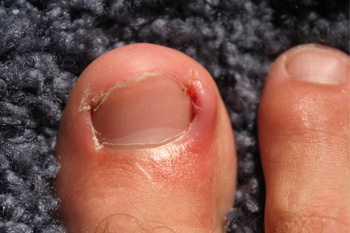
An ingrown toenail forms when the nail grows into the skin instead of over it. While an ingrown toenail most often affects the big toe, it can affect any of the toes. Toenails can become ingrown due to a variety of factors that include cutting the nail too short, rounding the corner of the nail, or wearing shoes that are too tight, and they can also form from trauma, such as stubbing the toe. They are often painful and appear as red and swollen, and they can become infected as well. Nails that appear infected or severely ingrown should be checked and treated by a podiatrist. Patients who are diabetic or suffer from peripheral artery disease should also consult with a podiatrist if they are struggling with ingrown toenails.

Ingrown toenails may initially present themselves as a minor discomfort, but they may progress into an infection in the skin without proper treatment. For more information about ingrown toenails, contact one of our podiatrists of Foot Health Center of Merrimack Valley. Our doctors can provide the care you need to keep you pain-free and on your feet.

Ingrown Toenails

Ingrown toenails are caused when the corner or side of a toenail grows into the soft flesh surrounding it. They often result in redness, swelling, pain, and in some cases, infection. This condition typically affects the big toe and may recur if it is not treated properly.

Causes

  • Improper toenail trimming
  • Genetics
  • Improper shoe fitting
  • Injury from pedicures or nail picking
  • Abnormal gait
  • Poor hygiene

You are more likely to develop an ingrown toenail if you are obese, have diabetes, arthritis, or have any fungal infection in your nails. Additionally, people who have foot or toe deformities are at a higher risk of developing an ingrown toenail.

Symptoms

Some symptoms of ingrown toenails are redness, swelling, and pain. In rare cases, there may be a yellowish drainage coming from the nail.

Treatment

Ignoring an ingrown toenail can have serious complications. Infections of the nail border can progress to a deeper soft-tissue infection, which can then turn into a bone infection. You should always speak with your podiatrist if you suspect you have an ingrown toenail, especially if you have diabetes or poor circulation.

If you have any questions, please feel free to contact one of our offices located in North Andover, and Tewksbury, MA . We offer the newest diagnostic and treatment technologies for all your foot care needs.

Read more about Ingrown Toenails

What Are the Different Types of Broken Ankles?

Ankle fractures can be classified into two different types based on which bone is broken. A tibial fracture, in which the shin bone breaks, is usually the result of a direct injury such as falling down the stairs. Tibial fractures often take longer to heal and recover from. A fibula fracture occurs when the thinner bone that runs along the outside of the lower leg is broken. The fibula may fracture in response to an impact to the leg or ankle. Repetitive impacts can lead to a stress fracture of the fibula, in which tiny cracks appear in the fibula bone. In severe fibula fractures, the bone may become displaced, causing a visible deformity. Regardless of which bone is injured, ankle fractures usually cause swelling, pain, bruising, tenderness, and difficulty walking or bearing weight on the affected ankle. If you have a broken ankle, please seek the care of a podiatrist.

Broken ankles need immediate treatment. If you are seeking treatment, contact one of our podiatrists from Foot Health Center of Merrimack Valley. Our doctors can provide the care you need to keep you pain-free and on your feet. 

Broken Ankles
A broken ankle is experienced when a person fractures their tibia or fibula in the lower leg and ankle area. Both of these bones are attached at the bottom of the leg and combine to form what we know to be our ankle.

When a physician is referring to a break of the ankle, he or she is usually referring to a break in the area where the tibia and fibula are joined to create our ankle joint. Ankles are more prone to fractures because the ankle is an area that suffers a lot of pressure and stress. There are some obvious signs when a person experiences a fractured ankle, and the following symptoms may be present.

Symptoms of a Fractured Ankle

  • Excessive pain when the area is touched or when any pressure is placed on the ankle
  • Swelling around the area
  • Bruising of the area
  • Area appears to be deformed

If you suspect an ankle fracture, it is recommended to seek treatment as soon as possible. The sooner you have your podiatrist diagnose the fracture, the quicker you’ll be on the way towards recovery.

If you have any questions, please feel free to contact one of our offices located in North Andover, and Tewksbury, MA . We offer the newest diagnostic and treatment technologies for all your foot care needs.

Read more about All About Broken Ankle

What Is Charcot Foot?

When the nerves are damaged in the extremities such as the feet, it is known as peripheral neuropathy. This ultimately leads to Charcot foot when the bones in the foot are weakened. These weakened bones can lead to fractures that worsen and cause the joints in the foot to collapse. Charcot foot can cause the foot to become deformed, and it can be disabling and even potentially lead to amputation. Common signs of Charcot foot are a warmness to the touch, redness, swelling, and pain. Because of its association to neuropathy and neuropathy’s association with diabetes, diabetic patients should monitor their feet for this condition. Patients who believe that they may have this condition should consult with a podiatrist as soon as possible. A podiatrist will be able to assess the foot and suggest treatment options.

Neuropathy

Neuropathy can be a potentially serious condition, especially if it is left undiagnosed. If you have any concerns that you may be experiencing nerve loss in your feet, consult with one of our podiatrists from Foot Health Center of Merrimack Valley. Our doctors will assess your condition and provide you with quality foot and ankle treatment for neuropathy.

What Is Neuropathy?

Neuropathy is a condition that leads to damage to the nerves in the body. Peripheral neuropathy, or neuropathy that affects your peripheral nervous system, usually occurs in the feet. Neuropathy can be triggered by a number of different causes. Such causes include diabetes, infections, cancers, disorders, and toxic substances.

Symptoms of Neuropathy Include:

  • Numbness
  • Sensation loss
  • Prickling and tingling sensations
  • Throbbing, freezing, burning pains
  • Muscle weakness

Those with diabetes are at serious risk due to being unable to feel an ulcer on their feet. Diabetics usually also suffer from poor blood circulation. This can lead to the wound not healing, infections occurring, and the limb may have to be amputated.

Treatment

To treat neuropathy in the foot, podiatrists will first diagnose the cause of the neuropathy. Figuring out the underlying cause of the neuropathy will allow the podiatrist to prescribe the best treatment, whether it be caused by diabetes, toxic substance exposure, infection, etc. If the nerve has not died, then it’s possible that sensation may be able to return to the foot.

Pain medication may be issued for pain. Electrical nerve stimulation can be used to stimulate nerves. If the neuropathy is caused from pressure on the nerves, then surgery may be necessary.

If you have any questions, please feel free to contact one of our offices located in North Andover, and Tewksbury, MA . We offer the newest diagnostic and treatment technologies for all your foot care needs.

Read more about Neuropathy

Wounds That Don't Heal Need to Be Checked

Your feet are covered most of the day. If you're diabetic, periodic screening is important for good health. Numbness is often a sign of diabetic foot and can mask a sore or wound.

How Do Heel Spurs Form?

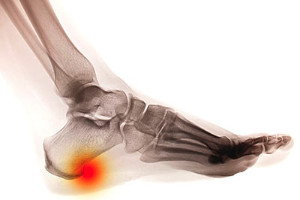
Heel spurs are bony protrusions that form on the heel bone due to calcium deposits.  These deposits tend to form over time and may be a result of a ligament that is connected to the heel bone being frequently overstretched and ultimately torn.  The most common issue that leads to heel spurs is plantar fasciitis which occurs when the band of tissues running along the bottom of the foot get injured and inflamed.  In fact, plantar fasciitis is the cause for around half of all heel spurs.  Heel spurs are often indicated by pain, tenderness and swelling that can make walking difficult.  If you are struggling with heel pain, it may be serious, and consulting with a podiatrist is recommended.

Heel spurs can be incredibly painful and sometimes may make you unable to participate in physical activities. To get medical care for your heel spurs, contact one of our podiatrists from Foot Health Center of Merrimack Valley. Our doctors will do everything possible to treat your condition.

Heels Spurs

Heel spurs are formed by calcium deposits on the back of the foot where the heel is. This can also be caused by small fragments of bone breaking off one section of the foot, attaching onto the back of the foot. Heel spurs can also be bone growth on the back of the foot and may grow in the direction of the arch of the foot.

Older individuals usually suffer from heel spurs and pain sometimes intensifies with age. One of the main condition's spurs are related to is plantar fasciitis.

Pain

The pain associated with spurs is often because of weight placed on the feet. When someone is walking, their entire weight is concentrated on the feet. Bone spurs then have the tendency to affect other bones and tissues around the foot. As the pain continues, the feet will become tender and sensitive over time.

Treatments

There are many ways to treat heel spurs. If one is suffering from heel spurs in conjunction with pain, there are several methods for healing. Medication, surgery, and herbal care are some options.

If you have any questions, please feel free to contact one of our offices located in North Andover, and Tewksbury, MA . We offer the newest diagnostic and treatment technologies for all your foot care needs.

Read more about How to Treat Heel Spurs

Do I Have Morton's Neuroma?

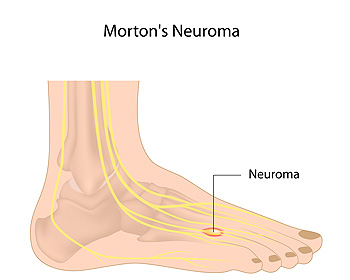
Morton’s neuroma is a painful foot condition caused by damage to the nerve between the third and fourth toes. The tissue that surrounds the nerve thickens due to inflammation, causing symptoms such as toe numbness, a tingling sensation, a feeling akin to “walking on a pebble,” and burning pain in the ball of the foot. Morton’s neuroma is eight to ten times more common in women than in men because it is believed to be caused by wearing ill-fitting shoes.  Morton's neuroma can also result from damaging the foot during high impact sports or from other trauma to the nerves of the feet. Having certain foot deformities, such as flat feet, high arches, hammertoes, or bunions, can also put you at an increased risk of developing Morton’s neuroma. If you have symptoms of this condition, please seek the care of a podiatrist.

Morton’s neuroma is a very uncomfortable condition to live with. If you think you have Morton’s neuroma, contact one of our podiatrists of Foot Health Center of Merrimack Valley. Our doctors will attend to all of your foot care needs and answer any of your related questions.  

Morton’s Neuroma

Morton's neuroma is a painful foot condition that commonly affects the areas between the second and third or third and fourth toe, although other areas of the foot are also susceptible. Morton’s neuroma is caused by an inflamed nerve in the foot that is being squeezed and aggravated by surrounding bones.

What Increases the Chances of Having Morton’s Neuroma?

  • Ill-fitting high heels or shoes that add pressure to the toe or foot
  • Jogging, running or any sport that involves constant impact to the foot
  • Flat feet, bunions, and any other foot deformities

Morton’s neuroma is a very treatable condition. Orthotics and shoe inserts can often be used to alleviate the pain on the forefront of the feet. In more severe cases, corticosteroids can also be prescribed. In order to figure out the best treatment for your neuroma, it’s recommended to seek the care of a podiatrist who can diagnose your condition and provide different treatment options.

If you have any questions, please feel free to contact one of our offices located in North Andover, and Tewksbury, MA . We offer the newest diagnostic and treatment technologies for all your foot care needs.

Read more about Morton's Neuroma
scroll to top