Understanding Bunions

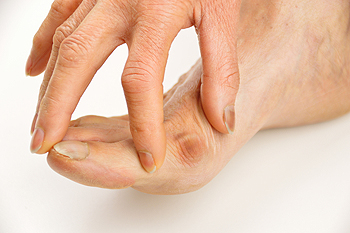
One of the most common forefoot issues is a bunion. This occurs when there is a bump on the inside of the foot near the big toe joint and the big toe begins moving towards, and potentially overlapping with, the smaller toes. Another type of bunion that can occur is a tailor’s bunion, also known as a bunionette. A tailor’s bunion occurs on the pinky toe. While bunions can form due to issues with foot function, such as arthritis, improperly fitting footwear tends to be the most common cause. Shoes that are too tight and squeeze the toes together generally lead the first metatarsal bone to protrude on the side of the foot. Because of this, wearing shoes with a wide toe box is usually recommended. Those who are suffering from a painful bunion should visit a podiatrist for proper treatment. Treatment options may include orthotics, and in severe cases, surgery may be suggested.

If you are suffering from bunions, contact one of our podiatrists of Foot Health Center of Merrimack Valley. Our doctors can provide the care you need to keep you pain-free and on your feet.

What Is a Bunion?

A bunion is formed of swollen tissue or an enlargement of boney growth, usually located at the base joint of the toe that connects to the foot. The swelling occurs due to the bones in the big toe shifting inward, which impacts the other toes of the foot. This causes the area around the base of the big toe to become inflamed and painful.

Why Do Bunions Form?

Genetics – Susceptibility to bunions are often hereditary

Stress on the feet – Poorly fitted and uncomfortable footwear that places stress on feet, such as heels, can worsen existing bunions

How Are Bunions Diagnosed?

Doctors often perform two tests – blood tests and x-rays – when trying to diagnose bunions, especially in the early stages of development. Blood tests help determine if the foot pain is being caused by something else, such as arthritis, while x-rays provide a clear picture of your bone structure to your doctor.

How Are Bunions Treated?

  • Refrain from wearing heels or similar shoes that cause discomfort
  • Select wider shoes that can provide more comfort and reduce pain
  • Anti-inflammatory and pain management drugs
  • Orthotics or foot inserts
  • Surgery

If you have any questions, please feel free to contact one of our offices located in North Andover, and Tewksbury, MA . We offer the newest diagnostic and treatment technologies for all your foot care needs.

Read more about What Are Bunions?

Who Does Sever’s Disease Affect?

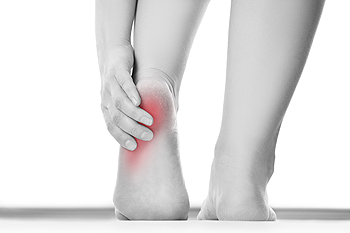
An injury to the growth plate in the heel may indicate a condition that is known as Sever’s disease. It generally affects children and young teenagers who participate in sporting activities. The heel can become inflamed, which can cause severe pain and discomfort. Mild relief may be found when the activity that caused the injury is temporarily stopped, and walking patterns may be changed. It may help to wear custom made orthotics if Sever’s disease is severe, and some patients find it necessary to take pain medication. If your child complains of heel pain, please consult with a podiatrist who can properly diagnose and treat Sever's disease.

Sever's disease often occurs in children and teens. If your child is experiencing foot or ankle pain, see one of our podiatrists from Foot Health Center of Merrimack Valley. Our doctors can treat your child’s foot and ankle needs.

Sever’s Disease

Sever’s disease is also known as calcaneal apophysitis, which is a medical condition that causes heel pain I none or both feet. The disease is known to affect children between the ages of 8 and 14.

Sever’s disease occurs when part of the child’s heel known as the growth plate (calcaneal epiphysis) is attached to the Achilles tendon. This area can suffer injury when the muscles and tendons of the growing foot do not keep pace with bone growth. Therefore, the constant pain which one experiences at the back of the heel will make the child unable to put any weight on the heel. The child is then forced to walk on their toes.

Symptoms

Acute pain – Pain associated with Sever’s disease is usually felt in the heel when the child engages in physical activity such as walking, jumping and or running.

Highly active – Children who are very active are among the most susceptible in experiencing Sever’s disease, because of the stress and tension placed on their feet.

If you have any questions, please feel free to contact one of our offices located in North Andover, and Tewksbury, MA . We offer the newest diagnostic and treatment technologies for all your foot care needs.

Read more about Sever's Disease

How to Keep Your Feet Healthy

The feet are a complex part of the body that contains 25% of our bones. Because the average 50-year-old has walked 75,000 miles, it is important to keep the feet strong and healthy to prevent pain and diseases from impacting them. Common skin-related issues on the feet include fungal nail infections, corns, calluses, warts, ingrown toenails and athlete’s foot. Common muscle, tendon and joint problems include hammertoe, heel spurs, plantar fasciitis, bunions and arthritis. In order to prevent these issues, proper foot care is important. Regularly washing the feet, wearing clean socks, and making sure your feet are dry are key steps to helping prevent skin-related issues. Wearing comfortable shoes that fit correctly, stretching and massaging the feet, and moving around after sitting for long periods of time are also important in reducing the risk of foot problems. The biggest key to foot health, however, is knowing when to see a podiatrist. If your foot pain is inhibiting your ability to walk and function, or you are diabetic and notice new issues with your feet, it is important to seek the care of a podiatrist.

Everyday foot care is very important to prevent infection and other foot ailments. If you need your feet checked, contact one of our podiatrists from Foot Health Center of Merrimack Valley. Our doctors can provide the care you need to keep you pain-free and on your feet.

Everyday Foot Care

Often, people take care of their bodies, face and hair more so than they do for their feet. But the feet are a very important aspect of our bodies, and one that we should pay more attention to. Without our feet, we would not be able to perform most daily tasks.

It is best to check your feet regularly to make sure there are no new bruises or cuts that you may not have noticed before. For dry feet, moisturizer can easily be a remedy and can be applied as often as necessary to the affected areas. Wearing shoes that fit well can also help you maintain good foot health, as well as making it easier to walk and do daily activities without the stress or pain of ill-fitting shoes, high heels, or even flip flops. Wearing clean socks with closed shoes is important to ensure that sweat and bacteria do not accumulate within the shoe. Clean socks help to prevent Athlete’s foot, fungi problems, bad odors, and can absorb sweat.

If you have any questions, please feel free to contact one of our offices located in North Andover, and Tewksbury, MA . We offer the newest diagnostic and treatment technologies for all your foot care needs.
Read more about Everyday Foot Care

Get 3D Custom Orthotics

3D scanning can give your orthotics the precise fit you need. Give your feet the best in comfort!

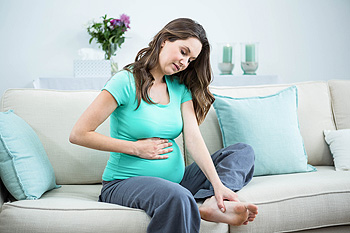
Leg and Foot Cramps During Pregnancy

Pregnant women often experience foot pain, and a common ailment during pregnancy can include leg cramps. They may develop as a result of shortened calf muscles, and they can cause severe pain and discomfort. Additional reasons why foot cramps can develop may be from a vitamin deficiency, or an imbalance in electrolytes. This type of pain generally occurs in the third trimester, and will gradually diminish once the baby is born. Relief may be attained when the affected leg is stretched, and the foot is rotated several times in clockwise and counterclockwise directions. If you would like additional information on why leg cramps can occur during pregnancy, and how to prevent them, please consult with a podiatrist.

Pregnant women with swollen feet can be treated with a variety of different methods that are readily available. For more information about other cures for swollen feet during pregnancy, consult with one of our podiatrists from Foot Health Center of Merrimack Valley. Our doctors will attend to all of your foot and ankle needs.

What Foot Problems Can Arise During Pregnancy?

One problem that can occur is overpronation, which occurs when the arch of the foot flattens and tends to roll inward.  This can cause pain and discomfort in your heels while you’re walking or even just standing up, trying to support your baby.  

Another problem is edema, or swelling in the extremities. This often affects the feet during pregnancy but tends to occur in the later stages. 

How Can I Keep My Feet Healthy During Pregnancy?

  • Wearing orthotics can provide extra support for the feet and help distribute weight evenly
  • Minimize the amount of time spent walking barefoot
  • Wear shoes with good arch support
  • Wear shoes that allow for good circulation to the feet
  • Elevate feet if you experience swelling
  • Massage your feet
  • Get regular, light exercise, such as walking, to promote blood circulation to the feet

If you have any questions, please feel free to contact one of our offices located in North Andover, and Tewksbury, MA . We offer the newest diagnostic and treatment technologies for all your foot care needs.
Read more about Pregnancy and Foot Health

Understanding Orthotics

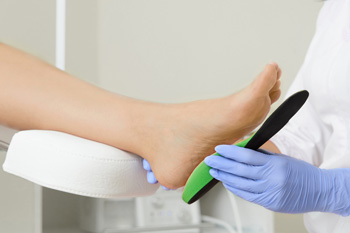
Orthotics are shoe inserts that are designed to relieve pain that is caused by a foot condition. Orthotics can help to treat a variety of ailments, such as corns and calluses, tendonitis, bunions, heel pain, and recurring stress fractures. Orthotics may also be used to help correct posture and alignment issues as needed. Types of orthotics can include prefabricated or custom orthotics, cushioned orthotics to provide shock absorption, and pressure relief orthotics that redistribute body weight across the sole of the foot. When prescribing orthotics, a podiatrist will consider a variety of factors, including existing foot conditions, foot structure, biomechanics, the type of shoes normally worn, and lifestyle factors. If you believe that orthotics may be helpful for your foot-related issues, don’t hesitate to visit a podiatrist for more information.

If you are having discomfort in your feet and would like to try orthotics, contact one of our podiatrists from Foot Health Center of Merrimack Valley. Our doctors can provide the care you need to keep you pain-free and on your feet.

What Are Orthotics?

Orthotics are inserts you can place into your shoes to help with a variety of foot problems such as flat feet or foot pain. Orthotics provide relief and comfort for minor foot and heel pain but can’t correct serious biomechanical problems in your feet.

Over-the-Counter Inserts

Orthotics come in a wide variety of over-the-counter inserts that are used to treat foot pain, heel pain, and minor problems. For example, arch supports can be inserted into your shoes to help correct overarched or flat feet, while gel insoles are often used because they provide comfort and relief from foot and heel pain by alleviating pressure.

Prescription Orthotics

If over-the-counter inserts don’t work for you or if you have a more severe foot concern, it is possible to have your podiatrist prescribe custom orthotics. These high-quality inserts are designed to treat problems such as abnormal motion, plantar fasciitis, and severe forms of heel pain. They can even be used to help patients suffering from diabetes by treating foot ulcers and painful calluses and are usually molded to your feet individually, which allows them to provide full support and comfort.

If you are experiencing minor to severe foot or heel pain, it’s recommended to speak with your podiatrist about the possibilities of using orthotics. A podiatrist can determine which type of orthotic is right for you and allow you to take the first steps towards being pain-free.

If you have any questions, please feel free to contact one of our offices located in North Andover, and Tewksbury, MA . We offer the newest diagnostic and treatment technologies for all your foot care needs.
Read more about Foot Orthotics

Understanding Cuboid Syndrome

Cuboid syndrome is a partial dislocation of the bones in the middle of the foot. While cuboid syndrome is typically the result of overuse or injury, pronated feet (feet that turn inward when walking), training on uneven surfaces, poorly fitted shoes, and climbing stairs can all be contributing factors as well . A common sign of cuboid syndrome is pain on the outside of the foot near the little toe. Pain may also be felt in the middle of the foot, or at the base of the fourth and fifth toes. Since the pain is sometimes difficult to pinpoint, cuboid syndrome is often confused with a stress fracture. Other symptoms can include difficulty walking, swelling, pain that becomes worse with weight-bearing, and increased pain when lifting the heel and pushing off the toe. If you are experiencing any pain in the foot it is highly recommended to consult with a podiatrist for a proper diagnosis and treatment.

Cuboid syndrome, also known as cuboid subluxation, occurs when the joints and ligaments near the cuboid bone in the foot become torn. If you have cuboid syndrome, consult with one of our podiatrists from Foot Health Center of Merrimack Valley. Our doctors will assess your condition and provide you with quality foot and ankle treatment.

Cuboid syndrome is a common cause of lateral foot pain, which is pain on the outside of the foot. The condition may happen suddenly due to an ankle sprain, or it may develop slowly overtime from repetitive tension through the bone and surrounding structures.

Causes

The most common causes of cuboid syndrome include:

  • Injury – The most common cause of this ailment is an ankle sprain.
  • Repetitive Strain – Tension placed through the peroneus longus muscle from repetitive activities such as jumping and running may cause excessive traction on the bone causing it to sublux.
  • Altered Foot Biomechanics – Most people suffering from cuboid subluxation have flat feet.

Symptoms

A common symptom of cuboid syndrome is pain along the outside of the foot which can be felt in the ankle and toes. This pain may create walking difficulties and may cause those with the condition to walk with a limp.

Diagnosis

Diagnosis of cuboid syndrome is often difficult, and it is often misdiagnosed. X-rays, MRIs and CT scans often fail to properly show the cuboid subluxation. Although there isn’t a specific test used to diagnose cuboid syndrome, your podiatrist will usually check if pain is felt while pressing firmly on the cuboid bone of your foot.

Treatment

Just as the range of causes varies widely, so do treatments. Some more common treatments are ice therapy, rest, exercise, taping, and orthotics.

If you have any questions, please feel free to contact one of our offices located in North Andover, and Tewksbury, MA . We offer the newest diagnostic and treatment technologies for all your foot care needs.

Read more about Cuboid Syndrome

Common Foot and Ankle Injuries in Soccer

Just like most physical activities, there is a risk of a variety of foot and ankle injuries that can occur from playing soccer. While many are acute, overuse injuries can happen as well. One of the most common injuries (and re-injuries) that occurs is an ankle sprain. When the ankle rolls, the ligaments can become damaged or torn. Achilles tendonitis is another form of an overuse injury that causes pain and inflammation to the Achilles tendon in the back of the ankle. Metatarsal stress fractures are also a common overuse injury in soccer. A stress fracture is a hairline crack in the bones that causes gradual worsening pain. If you have been injured or notice moderate to severe pain or swelling, especially while walking, visiting a podiatrist for a proper diagnosis and treatment method is highly recommended.

Sports related foot and ankle injuries require proper treatment before players can go back to their regular routines. For more information, contact one of our podiatrists of Foot Health Center of Merrimack Valley. Our doctors can provide the care you need to keep you pain-free and on your feet.

Sports Related Foot and Ankle Injuries

Foot and ankle injuries are a common occurrence when it comes to athletes of any sport. While many athletes dismiss the initial aches and pains, the truth is that ignoring potential foot and ankle injuries can lead to serious problems. As athletes continue to place pressure and strain the area further, a mild injury can turn into something as serious as a rupture and may lead to a permanent disability. There are many factors that contribute to sports related foot and ankle injuries, which include failure to warm up properly, not providing support or wearing bad footwear. Common injuries and conditions athletes face, including:

  • Plantar Fasciitis
  • Achilles Tendinitis
  • Achilles Tendon Rupture
  • Ankle Sprains

Sports related injuries are commonly treated using the RICE method. This includes rest, applying ice to the injured area, compression and elevating the ankle. More serious sprains and injuries may require surgery, which could include arthroscopic and reconstructive surgery. Rehabilitation and therapy may also be required in order to get any recovering athlete to become fully functional again. Any unusual aches and pains an athlete sustains must be evaluated by a licensed, reputable medical professional.

If you have any questions please contact one of our offices located in North Andover, and Tewksbury, MA . We offer the newest diagnostic and treatment technologies for all your foot and ankle needs.

Read more about Sports Related Foot And Ankle Injuries

Stretching The Arch May Help Certain Foot Conditions

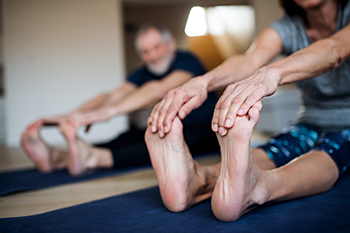
Many patients who have certain foot conditions can experience arch pain on a regular basis. This can affect the ability to accomplish daily activities and can cause frustration. There are specific stretches and exercises that can help to ease the discomfort from plantar fasciitis, which is characterized by heel and arch pain. An effective stretch consists of stretching the toes and heels away from each other while sitting in a chair with one leg crossed over the other. It is beneficial to hold this position for several seconds, then repeat on the other foot. Additionally, the calf can be stretched by standing on a step, and gently lowering one heel at a time. The whole foot may become stronger when towel scrunches are performed. If you would like more information on techniques that can help to stretch the feet, please consult with a podiatrist.

Stretching the feet is a great way to prevent injuries. If you have any concerns with your feet consult with one of our podiatrists from Foot Health Center of Merrimack Valley. Our doctors will assess your condition and provide you with quality foot and ankle treatment.

Stretching the Feet

Stretching the muscles in the foot is an important part in any physical activity. Feet that are tight can lead to less flexibility and make you more prone to injury. One of the most common forms of foot pain, plantar fasciitis, can be stretched out to help ease the pain. Stretching can not only ease pain from plantar fasciitis but also prevent it as well. However, it is important to see a podiatrist first if stretching is right for you. Podiatrists can also recommend other ways to stretch your feet. Once you know whether stretching is right for you, here are some excellent stretches you can do.

  • Using a foam roller or any cylindrical object (a water bottle or soda can will do), roll the object under your foot back and forth. You should also exert pressure on the object. Be sure to do this to both feet for a minute. Do this exercise three times each.
  • Similar to the previous one, take a ball, such as a tennis ball, and roll it under your foot while seated and exert pressure on it.
  • Grab a resistance band or towel and take a seat. If you are using a towel, fold it length wise. Next put either one between the ball of your foot and heel and pull with both hands on each side towards you. Hold this for 15 seconds and then switch feet. Do this three times for each foot.
  • Finally hold your big toe while crossing one leg over the other. Pull the toe towards you and hold for 15 seconds. Once again do this three times per foot.

It is best to go easy when first stretching your foot and work your way up. If your foot starts hurting, stop exercising and ice and rest the foot. It is advised to then see a podiatrist for help.

If you have any questions please contact one of our offices located in North Andover, and Tewksbury, MA . We offer the newest diagnostic and treatment technologies for all your foot and ankle needs.

Read more about How to Stretch Your Feet

Reminder: When Was the Last Time...?

Custom orthotics, or shoe inserts, should be periodically replaced. Orthotics must fit properly to give you the best results. Protect your feet and ankles!

scroll to top