
Suffering from this type of pain? You may have the foot condition known as Morton's neuroma. Morton's neuroma may develop as a result of ill-fitting footwear and existing foot deformities. We can help.
Suffering from this type of pain? You may have the foot condition known as Morton's neuroma. Morton's neuroma may develop as a result of ill-fitting footwear and existing foot deformities. We can help.

Cycling places unique demands on the feet and ankles, and proper support can make a significant difference in performance and injury prevention. Arch support insoles with a forefoot wedge that raises or tilts the front part of the foot for targeted pressure adjustment, help improve alignment, optimize power transfer, and reduce strain during long rides. Without proper support, cyclists may experience foot pain, ankle instability, or overuse injuries such as tendonitis and stress fractures. Risk factors include improper shoe fit, flat feet, and repetitive pedaling motions. A podiatrist can evaluate biomechanics, recommend custom insoles, and treat cycling-related injuries to keep riders strong and efficient. If you have foot pain from cycling, it is suggested that you consult a podiatrist who can treat various foot conditions, and guide you on correct insoles to wear for an enhanced cycling performance.
If you are having discomfort in your feet and would like to try orthotics, contact one of our podiatrists from Foot Health Center of Merrimack Valley. Our doctors can provide the care you need to keep you pain-free and on your feet.
What Are Orthotics?
Orthotics are inserts you can place into your shoes to help with a variety of foot problems such as flat feet or foot pain. Orthotics provide relief and comfort for minor foot and heel pain but can’t correct serious biomechanical problems in your feet.
Over-the-Counter Inserts
Orthotics come in a wide variety of over-the-counter inserts that are used to treat foot pain, heel pain, and minor problems. For example, arch supports can be inserted into your shoes to help correct overarched or flat feet, while gel insoles are often used because they provide comfort and relief from foot and heel pain by alleviating pressure.
Prescription Orthotics
If over-the-counter inserts don’t work for you or if you have a more severe foot concern, it is possible to have your podiatrist prescribe custom orthotics. These high-quality inserts are designed to treat problems such as abnormal motion, plantar fasciitis, and severe forms of heel pain. They can even be used to help patients suffering from diabetes by treating foot ulcers and painful calluses and are usually molded to your feet individually, which allows them to provide full support and comfort.
If you are experiencing minor to severe foot or heel pain, it’s recommended to speak with your podiatrist about the possibilities of using orthotics. A podiatrist can determine which type of orthotic is right for you and allow you to take the first steps towards being pain-free.
If you have any questions, please feel free to contact one of our offices located in North Andover, and Tewksbury, MA . We offer the newest diagnostic and treatment technologies for all your foot care needs.
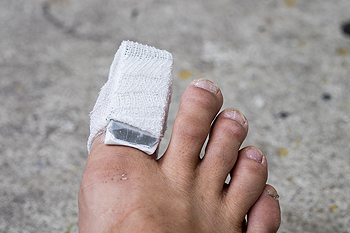 Common reasons why a broken toe can occur may be from stubbing it against a piece of furniture, or if a heavy object drops on it. In severe fractures, the patient may hear the bone as it cracks, and this most likely indicates that it is a broken toe. Some of the symptoms that are associated with this condition can include swelling, bruising, and the toe may tingle and feel numb. Many broken toes are treated by using the buddy taping method. This consists of taping the affected toe to the toe next to it. This is helpful in providing the necessary support as the healing process begins. If you feel you may have a broken toe, it is suggested that you consult with a podiatrist who can perform a proper diagnosis and offer correct treatment options.
Broken toes may cause a lot of pain and should be treated as soon as possible. If you have any concerns about your feet, contact one of our podiatrists from Foot Health Center of Merrimack Valley. Our doctors will treat your foot and ankle needs.
What Is a Broken Toe?
A broken toe occurs when one or more of the toe bones of the foot are broken after an injury. Injuries such as stubbing your toe or dropping a heavy object on it may cause a toe fracture.
Symptoms of a Broken Toe
Although the injured toe should be monitored daily, it is especially important to have a podiatrist look at your toe if you have severe symptoms. Some of these symptoms include worsening or new pain that is not relieved with medication, sores, redness, or open wounds near the toe.
If you have any questions please feel free to contact one of our offices located in North Andover, and Tewksbury, MA . We offer the newest diagnostic tools and technology to treat your foot and ankle needs.

Flat feet, or fallen arches, occur when the arches of the feet collapse, causing the soles to make contact with the ground. This condition can create difficulties with walking, running, or standing for long periods, and often leads to fatigue, pain, and alignment issues. Types of flat feet include flexible flat foot, where the arch appears when not bearing weight, tight Achilles tendon, which limits ankle flexibility, and posterior tibial dysfunction, where tendon weakness causes arch collapse over time. A podiatrist can assess the type of flat feet you have and recommend orthotics, stretching exercises, and supportive footwear in addition to providing treatments to reduce pain and improve function. If you have flat feet, it is suggested that you consult a podiatrist who can determine which type it is, and offer effective relief and management tips.
Flatfoot is a condition many people suffer from. If you have flat feet, contact one of our podiatrists from Foot Health Center of Merrimack Valley. Our doctors will treat your foot and ankle needs.
What Are Flat Feet?
Flatfoot is a condition in which the arch of the foot is depressed and the sole of the foot is almost completely in contact with the ground. About 20-30% of the population generally has flat feet because their arches never formed during growth.
Conditions & Problems:
Having flat feet makes it difficult to run or walk because of the stress placed on the ankles.
Alignment – The general alignment of your legs can be disrupted, because the ankles move inward which can cause major discomfort.
Knees – If you have complications with your knees, flat feet can be a contributor to arthritis in that area.
Symptoms
Treatment
If you are experiencing pain and stress on the foot you may weaken the posterior tibial tendon, which runs around the inside of the ankle.
If you have any questions, please feel free to contact one of our offices located in North Andover, and Tewksbury, MA . We offer the newest diagnostic and treatment technologies for all your foot care needs.

Peripheral artery disease, or PAD, affects the blood vessels that supply the feet and ankles. It reduces circulation and limits oxygen delivery to these tissues. Early signs of peripheral artery disease include cold feet, diminished hair growth on the toes, or a weak pulse in the ankles. As peripheral artery disease progresses, cramping or pain in the feet during walking that improves with rest can occur. More advanced cases of PAD can cause persistent pain in the feet at night, skin that appears pale or bluish, and wounds on the toes or heels that are slow to heal. In severe cases, ulcers or tissue loss may occur, which raises the risk of infection and possible limb loss, if left untreated. A podiatrist can detect PAD by examining the feet, checking circulation, and ordering diagnostic tests when needed. If you have symptoms of peripheral artery disease affecting the feet, it is suggested that you schedule an appointment with a podiatrist for a diagnosis and appropriate treatment.
Peripheral artery disease can pose a serious risk to your health. It can increase the risk of stroke and heart attack. If you have symptoms of peripheral artery disease, consult with one of our podiatrists from Foot Health Center of Merrimack Valley. Our doctors will assess your condition and provide you with quality foot and ankle treatment.
Peripheral artery disease (PAD) is when arteries are constricted due to plaque (fatty deposits) build-up. This results in less blood flow to the legs and other extremities. The main cause of PAD is atherosclerosis, in which plaque builds up in the arteries.
Symptoms
Symptoms of PAD include:
It is important to note that a majority of individuals never show any symptoms of PAD.
Diagnosis
While PAD occurs in the legs and arteries, Podiatrists can diagnose PAD. Podiatrists utilize a test called an ankle-brachial index (ABI). An ABI test compares blood pressure in your arm to you ankle to see if any abnormality occurs. Ultrasound and imaging devices may also be used.
Treatment
Fortunately, lifestyle changes such as maintaining a healthy diet, exercising, managing cholesterol and blood sugar levels, and quitting smoking, can all treat PAD. Medications that prevent clots from occurring can be prescribed. Finally, in some cases, surgery may be recommended.
If you have any questions, please feel free to contact one of our offices located in North Andover, and Tewksbury, MA . We offer the newest diagnostic and treatment technologies for all your foot care needs.
Peripheral artery disease, or PAD, affects the blood vessels that supply the feet and ankles. It reduces circulation and limits oxygen delivery to these tissues. Early signs of peripheral artery disease include cold feet, diminished hair growth on the toes, or a weak pulse in the ankles. As peripheral artery disease progresses, cramping or pain in the feet during walking that improves with rest can occur. More advanced cases of PAD can cause persistent pain in the feet at night, skin that appears pale or bluish, and wounds on the toes or heels that are slow to heal. In severe cases, ulcers or tissue loss may occur, which raises the risk of infection and possible limb loss, if left untreated. A podiatrist can detect PAD by examining the feet, checking circulation, and ordering diagnostic tests when needed. If you have symptoms of peripheral artery disease affecting the feet, it is suggested that you schedule an appointment with a podiatrist for a diagnosis and appropriate treatment.
Peripheral artery disease can pose a serious risk to your health. It can increase the risk of stroke and heart attack. If you have symptoms of peripheral artery disease, consult with one of our podiatrists from Foot Health Center of Merrimack Valley. Our doctors will assess your condition and provide you with quality foot and ankle treatment.
Peripheral artery disease (PAD) is when arteries are constricted due to plaque (fatty deposits) build-up. This results in less blood flow to the legs and other extremities. The main cause of PAD is atherosclerosis, in which plaque builds up in the arteries.
Symptoms
Symptoms of PAD include:
It is important to note that a majority of individuals never show any symptoms of PAD.
Diagnosis
While PAD occurs in the legs and arteries, Podiatrists can diagnose PAD. Podiatrists utilize a test called an ankle-brachial index (ABI). An ABI test compares blood pressure in your arm to you ankle to see if any abnormality occurs. Ultrasound and imaging devices may also be used.
Treatment
Fortunately, lifestyle changes such as maintaining a healthy diet, exercising, managing cholesterol and blood sugar levels, and quitting smoking, can all treat PAD. Medications that prevent clots from occurring can be prescribed. Finally, in some cases, surgery may be recommended.
If you have any questions, please feel free to contact one of our offices located in North Andover, and Tewksbury, MA . We offer the newest diagnostic and treatment technologies for all your foot care needs.

Plantar warts are small growths that develop on parts of the feet that bear weight. They're typically found on the bottom of the foot. Don't live with plantar warts, and call us today!

Heel spur removal is a surgical procedure performed to alleviate pain caused by bony growths on the underside of the heel. Indications for this procedure include chronic heel pain that does not improve with conservative treatments, such as orthotics or anti-inflammatory measures. Heel spurs often develop due to repetitive stress, plantar fasciitis, or abnormal foot mechanics. Symptoms include sharp heel pain, especially with the first steps in the morning, swelling, and tenderness. A podiatrist can help by diagnosing the condition, exploring non-surgical options, or determining if surgery is necessary for lasting relief. If heel pain is affecting your mobility, it is suggested that you contact a podiatrist for an expert evaluation and care.
Foot surgery is sometimes necessary to treat a foot ailment. To learn more, contact one of our podiatrists of Foot Health Center of Merrimack Valley. Our doctors will assist you with all of your foot and ankle needs.
When Is Surgery Necessary?
Foot and ankle surgery is generally reserved for cases in which less invasive, conservative procedures have failed to alleviate the problem. Some of the cases in which surgery may be necessary include:
What Types of Surgery Are There?
The type of surgery you receive will depend on the nature of the problem you have. Some of the possible surgeries include:
Benefits of Surgery
Although surgery is usually a last resort, it can provide more complete pain relief compared to non-surgical methods and may allow you to finally resume full activity.
Surgical techniques have also become increasingly sophisticated. Techniques like endoscopic surgery allow for smaller incisions and faster recovery times.
If you have any questions, please feel free to contact one of our offices located in North Andover, and Tewksbury, MA . We offer the newest diagnostic and treatment technologies for all your foot care needs.
Heel spur removal is a surgical procedure performed to alleviate pain caused by bony growths on the underside of the heel. Indications for this procedure include chronic heel pain that does not improve with conservative treatments, such as orthotics or anti-inflammatory measures. Heel spurs often develop due to repetitive stress, plantar fasciitis, or abnormal foot mechanics. Symptoms include sharp heel pain, especially with the first steps in the morning, swelling, and tenderness. A podiatrist can help by diagnosing the condition, exploring non-surgical options, or determining if surgery is necessary for lasting relief. If heel pain is affecting your mobility, it is suggested that you contact a podiatrist for an expert evaluation and care.
Foot surgery is sometimes necessary to treat a foot ailment. To learn more, contact one of our podiatrists of Foot Health Center of Merrimack Valley. Our doctors will assist you with all of your foot and ankle needs.
When Is Surgery Necessary?
Foot and ankle surgery is generally reserved for cases in which less invasive, conservative procedures have failed to alleviate the problem. Some of the cases in which surgery may be necessary include:
What Types of Surgery Are There?
The type of surgery you receive will depend on the nature of the problem you have. Some of the possible surgeries include:
Benefits of Surgery
Although surgery is usually a last resort, it can provide more complete pain relief compared to non-surgical methods and may allow you to finally resume full activity.
Surgical techniques have also become increasingly sophisticated. Techniques like endoscopic surgery allow for smaller incisions and faster recovery times.
If you have any questions, please feel free to contact one of our offices located in North Andover, and Tewksbury, MA . We offer the newest diagnostic and treatment technologies for all your foot care needs.

Nail fungus, also known as onychomycosis, affects the toenails, causing them to become thick, discolored, brittle, and sometimes foul-smelling. It often begins as a white or yellow spot under the nail and can spread deeper, causing the nail to darken, crumble, or even separate from the nail bed. Causes include exposure to moist environments, walking barefoot in communal areas like around pools or in gyms, wearing tight shoes, having athlete’s foot, or a weakened immune system. People with diabetes or poor circulation are also at a higher risk. In some cases, the infection may cause discomfort or pain, especially when wearing shoes. A podiatrist can diagnose nail fungus by examining the nail, and possibly taking a sample to confirm the type of fungus. Treatment options include topical or oral antifungal medications, or, in severe cases, removal of the affected nail. If you have toenail fungus, it is suggested that you schedule an appointment with a podiatrist for effective treatment solutions.
For more information about treatment, contact one of our podiatrists of Foot Health Center of Merrimack Valley. Our doctors can provide the care you need to keep you pain-free and on your feet.
Toenail Fungus Treatment
Toenail fungus is a condition that affects many people and can be especially hard to get rid of. Fortunately, there are several methods to go about treating and avoiding it.
Antifungals & Deterrence
Oral antifungal medicine has been shown to be effective in many cases. It is important to consult with a podiatrist to determine the proper regiment for you, or potentially explore other options.
Applying foot powder on the feet and shoes helps keep the feet free of moisture and sweat.
Sandals or open toed shoes – Wearing these will allow air movement and help keep feet dry. They also expose your feet to light, which fungus cannot tolerate. Socks with moisture wicking material also help as well.
If you have any questions please contact one of our offices located in North Andover, and Tewksbury, MA . We offer the newest diagnostic and treatment technologies for all your foot and ankle needs.
