
Wearing the wrong running shoes can lead to several issues that affect comfort, performance, and overall foot health. Poor performance is a common sign, as improper support or fit can cause discomfort and inefficiency while running. Runners may experience fatigue more quickly and struggle with maintaining proper form. Premature wear and tear on the shoes can also indicate a poor match, as excessive breakdown of the sole or cushioning suggests inadequate shock absorption or improper foot alignment. Injury is another major concern, as wearing ill-fitting shoes can contribute to blisters, shin splints, knee pain, or even stress fractures. Persistent discomfort, muscle soreness, and joint pain may develop over time. If you have developed foot conditions from wearing the wrong type of running shoe, it is suggested that you visit a podiatrist who can treat various foot ailments, and guide you on what type of shoes to buy for your desired style of running.
If you are a runner, wearing the right running shoe is essential. For more information, contact one of our podiatrists from Foot Health Center of Merrimack Valley. Our doctors can provide the care you need to keep you pain-free and on your feet.
Choosing the Right Running Shoe for Your Foot Type
To increase performance and avoid the risk of injury, it is important to choose the right running shoe based on your foot type. The general design of running shoes revolves around pronation, which is how the ankle rolls from outside to inside when the foot strikes the ground.
If you have any questions, please feel free to contact one of our offices located in North Andover, and Tewksbury, MA . We offer the newest diagnostic and treatment technologies for all your foot care needs.

Mechanical foot pain is one of the most common reasons people visit a podiatrist. It happens when the structures in your feet, like bones, muscles, ligaments, or tendons, are strained or overworked. This type of pain often results from too much standing, walking, running, or wearing unsupportive shoes. Flat feet, high arches, and poor foot alignment can also lead to mechanical pain. You might feel aching, soreness, or sharp pain, usually in the heel, arch, or ball of the foot. The good news is that mechanical foot pain often improves with rest, wearing proper footwear, custom orthotics, stretching, and strengthening exercises. If foot pain is making it hard to get through your day, it is suggested that you visit a podiatrist who can diagnose the problem and help you find relief.
Foot Pain
Foot pain can be extremely painful and debilitating. If you have a foot pain, consult with one of our podiatrists from Foot Health Center of Merrimack Valley. Our doctors will assess your condition and provide you with quality foot and ankle treatment.
Causes
Foot pain is a very broad condition that could be caused by one or more ailments. The most common include:
Diagnosis
To figure out the cause of foot pain, podiatrists utilize several different methods. This can range from simple visual inspections and sensation tests to X-rays and MRI scans. Prior medical history, family medical history, and any recent physical traumatic events will all be taken into consideration for a proper diagnosis.
Treatment
Treatment depends upon the cause of the foot pain. Whether it is resting, staying off the foot, or having surgery; podiatrists have a number of treatment options available for foot pain.
If you have any questions, please feel free to contact one of our offices located in North Andover, and Tewksbury, MA . We offer the newest diagnostic and treatment technologies for all your foot care needs.

Regular exercise helps manage foot arthritis by reducing stiffness, improving flexibility, and strengthening the muscles that support the joints. Stretching the big toe with gentle flexion improves mobility in the toe joint, reducing discomfort during walking and daily activities. The ankle alphabet exercise increases range of motion by encouraging controlled movement in all directions, promoting joint flexibility. Towel curls strengthen the small muscles of the foot by using the toes to grip and pull a towel, improving stability and reducing pain. If you have foot pain, it is suggested that you consult a podiatrist who can accurately diagnose foot arthritis, and guide you toward effective relief and appropriate mobility exercises.
Arthritis can be a difficult condition to live with. If you are seeking treatment, contact one of our podiatrists from Foot Health Center of Merrimack Valley. Our doctors can provide the care you need to keep you pain-free and on your feet.
Arthritic Foot Care
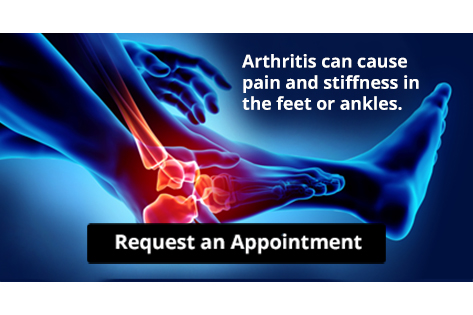
Arthritis is a joint disorder that involves the inflammation of different joints in your body, such as those in your feet. Arthritis is often caused by a degenerative joint disease and causes mild to severe pain in all affected areas. In addition to this, swelling and stiffness in the affected joints can also be a common symptom of arthritis.
In many cases, wearing ill-fitting shoes can worsen the effects and pain of arthritis. Wearing shoes that have a lower heel and extra room can help your feet feel more comfortable. In cases of rheumatoid arthritis, the arch in your foot may become problematic. Buying shoes with proper arch support that contour to your feet can help immensely.
Alleviating Arthritic Pain
It is best to see your doctor for the treatment that is right for your needs and symptoms. Conditions vary, and a podiatrist can help you determine the right method of care for your feet.
If you have any questions please feel free to contact one of our offices located in North Andover, and Tewksbury, MA . We offer the newest diagnostic tools and technology to treat your foot and ankle needs.

Clubfoot is a congenital foot deformity in which a newborn's foot is twisted inward or downward due to abnormal development of the muscles, tendons, and bones. This condition can affect one or both feet and varies in severity. The exact cause is not always known, but genetic and environmental factors may play a role. Limited movement in the womb or underlying neuromuscular disorders can also contribute to its development. Symptoms of clubfoot include a visibly twisted or rotated foot, difficulty in placing the sole flat on the ground, and stiffness in the affected area. Without treatment, walking can become challenging as the child grows. If your child has been born with clubfoot, it is suggested that you have a podiatrist on your healthcare team that can provide the best possible recovery results.
Congenital foot problems require immediate attention to avoid future complications. If you have any concerns, contact one of our podiatrists of Foot Health Center of Merrimack Valley. Our doctors can provide the care you need to keep you pain-free and on your feet.
Congenital foot problems are deformities affecting the feet, toes, and/or ankles that children are born with. Some of these conditions have a genetic cause while others just happen. Some specific foot ailments that children may be born with include clubfeet, polydactyly/macrodactyly, and cleft foot. There are several other foot anomalies that can occur congenitally. What all of these conditions have in common is that a child may experience difficulty walking or performing everyday activities, as well as trouble finding footwear that fits their foot deformity. Some of these conditions are more serious than others. Consulting with a podiatrist as early as possible will help in properly diagnosing a child’s foot condition while getting the necessary treatment underway.
What are Causes of Congenital Foot Problem?
A congenital foot problem is one that happens to a child at birth. These conditions can be caused by a genetic predisposition, developmental or positional abnormalities during gestation, or with no known cause.
What are Symptoms of Congenital Foot Problems?
Symptoms vary by the congenital condition. Symptoms may consist of the following:
Treatment and Prevention
While there is nothing one can do to prevent congenital foot problems, raising awareness and receiving neonatal screenings are important. Early detection by taking your child to a podiatrist leads to the best outcome possible.
If you have any questions, please feel free to contact one of our offices located in North Andover, and Tewksbury, MA . We offer the newest diagnostic and treatment technologies for all your foot care needs.

Bunions are bony bumps that form at the base of the big toe, often caused when the tip of the toe angles inward toward the other toes. This deformity can lead to pain, swelling, redness, and difficulty finding comfortable shoes. The affected area may become tender, and, as the bunion progresses, it can affect walking and lead to other foot issues like calluses or hammertoes. A podiatrist can evaluate your bunion and offer various treatments. For mild cases, they may recommend lifestyle changes, such as wearing shoes with a wider toe box or using padding to reduce pressure. Custom orthotics can help correct foot alignment, providing relief from discomfort. In more severe cases, a podiatrist may suggest surgical options to correct the deformity and improve function. If you are experiencing pain or discomfort from a bunion, it is suggested that you schedule an appointment with a podiatrist.
If you are suffering from bunions, contact one of our podiatrists of Foot Health Center of Merrimack Valley. Our doctors can provide the care you need to keep you pain-free and on your feet.
What Is a Bunion?
A bunion is formed of swollen tissue or an enlargement of boney growth, usually located at the base joint of the toe that connects to the foot. The swelling occurs due to the bones in the big toe shifting inward, which impacts the other toes of the foot. This causes the area around the base of the big toe to become inflamed and painful.
Why Do Bunions Form?
Genetics – Susceptibility to bunions are often hereditary
Stress on the feet – Poorly fitted and uncomfortable footwear that places stress on feet, such as heels, can worsen existing bunions
How Are Bunions Diagnosed?
Podiatrists often perform two tests – blood tests and x-rays – when trying to diagnose bunions, especially in the early stages of development. Blood tests help determine if the foot pain is being caused by something else, such as arthritis, while x-rays provide a clear picture of your bone structure to your provider.
How Are Bunions Treated?
If you have any questions, please feel free to contact one of our offices located in North Andover, and Tewksbury, MA . We offer the newest diagnostic and treatment technologies for all your foot care needs.

Foot injuries are common, especially for those who are active runners, but many can be prevented with proper care and attention. Plantar fasciitis, which causes heel pain, often results from overuse or inadequate footwear. Achilles tendinitis occurs when the Achilles tendon becomes inflamed, typically from repetitive stress or tight calf muscles. Stress fractures in the foot can develop from overtraining or improper footwear, while shin splints cause pain along the shin due to overuse. Metatarsalgia refers to pain in the ball of the foot, often caused by high-impact activities. Preventing these foot injuries involves wearing appropriate footwear, warming up before running, strengthening the muscles, and avoiding overuse. Stretching, maintaining a healthy weight, and gradually increasing activity levels also help protect the feet from strain and injury. If you have sustained a foot or ankle injury from running, it is suggested that you contact a podiatrist who can treat various foot conditions, and guide you on additional prevention tips.
Exercising your feet regularly with the proper foot wear is a great way to prevent injuries. If you have any concerns about your feet, contact one of our podiatrists of Foot Health Center of Merrimack Valley. Our doctors will treat your foot and ankle needs.
How to Prevent Running Injuries
Many common running injuries are caused by overuse and overtraining. When the back of the kneecap starts wearing out and starts causing pain in your knee, this is commonly referred to as runner’s knee. Runner’s knee is a decrease in strength in your quadriceps and can occur if you’re not wearing properly fitted or supporting shoes. To prevent runner’s knee, focusing on hip strengthening is a good idea, as well as strengthening your quads to keep the kneecaps aligned.
What Are Some Causes of Running Injuries?
- One cause of a common running injury is called iliotibial band syndrome.
- Plantar fasciitis is also another common injury.
- Stress fractures can occur from overtraining, lack of calcium, or even your running style.
Best Ways to Prevent Running Injuries
- Wear footwear that fits properly and suits your running needs.
- Running shoes are the only protective gear that runners have to safeguard them from injury.
- Make a training schedule. Adding strengthening exercises as well as regular stretching can help keep you strong and limber and can lessen the possibility of injuries.
- Stretching keeps muscles limber; this will help you gain better flexibility.
If you have any questions, please feel free to contact one of our offices located in North Andover, and Tewksbury, MA . We offer the newest diagnostic and treatment technologies for all your foot care needs.

Children are constantly on the move, making their feet vulnerable to cuts from sharp objects, rough surfaces, or accidental scrapes. These injuries are common in barefoot activities like playing on the beach, running outside, or walking around pools. Cuts can happen to any child, but are more frequent in those who are active or prone to minor accidents. Small cuts are usually cleaned, covered with an antibiotic ointment, and bandaged to prevent dirt and bacteria from entering. Deeper wounds may require butterfly bandages or medical closure strips to keep the skin together while healing. To prevent infection, parents should monitor healing, change dressings regularly, and watch for signs of redness, swelling, or pus. Keeping feet clean and covered in risky environments can reduce injuries. If a cut is deep, slow to heal, or shows signs of infection, it is strongly suggested that you take your child in to see a podiatrist for proper care.
Wound care is an important part in dealing with diabetes. If you have diabetes and a foot wound or would like more information about wound care for diabetics, consult with one of our podiatrists from Foot Health Center of Merrimack Valley. Our doctors will assess your condition and provide you with quality foot and ankle treatment.
What Is Wound Care?
Wound care is the practice of taking proper care of a wound. This can range from the smallest to the largest of wounds. While everyone can benefit from proper wound care, it is much more important for diabetics. Diabetics often suffer from poor blood circulation which causes wounds to heal much slower than they would in a non-diabetic.
What Is the Importance of Wound Care?
While it may not seem apparent with small ulcers on the foot, for diabetics, any size ulcer can become infected. Diabetics often also suffer from neuropathy, or nerve loss. This means they might not even feel when they have an ulcer on their foot. If the wound becomes severely infected, amputation may be necessary. Therefore, it is of the upmost importance to properly care for any and all foot wounds.
How to Care for Wounds
The best way to care for foot wounds is to prevent them. For diabetics, this means daily inspections of the feet for any signs of abnormalities or ulcers. It is also recommended to see a podiatrist several times a year for a foot inspection. If you do have an ulcer, run the wound under water to clear dirt from the wound; then apply antibiotic ointment to the wound and cover with a bandage. Bandages should be changed daily and keeping pressure off the wound is smart. It is advised to see a podiatrist, who can keep an eye on it.
If you have any questions please contact one of our offices located in North Andover, and Tewksbury, MA . We offer the newest diagnostic and treatment technologies for all your foot and ankle needs.

Pain in the arch of the foot can greatly impact your daily life, making it challenging to bear weight or walk. This discomfort may result from a variety of conditions, including plantar fasciitis, flat feet, or overpronation. Plantar fasciitis, a common cause, involves inflammation of the plantar fascia, a thick band of tissue that runs along the bottom of the foot. Flat feet, or fallen arches, occur when the arch collapses, leading to pain and strain due to improper distribution of weight. Overpronation, where the foot rolls inward excessively during walking, can also strain the ligaments and muscles, contributing to arch pain. Additional factors such as obesity, ill-fitting footwear, and repetitive high-impact activities can worsen the issue. A podiatrist, a specialist in diagnosing and treating foot conditions, can evaluate your feet to determine the underlying cause of the pain. Treatment may include custom orthotics or specific exercises to relieve pain and improve foot function. If you are experiencing arch pain, it is suggested that you schedule an appointment with a podiatrist for an evaluation and to discuss potential treatment options.
Foot Pain
Foot pain can be extremely painful and debilitating. If you have a foot pain, consult with one of our podiatrists from Foot Health Center of Merrimack Valley. Our doctors will assess your condition and provide you with quality foot and ankle treatment.
Causes
Foot pain is a very broad condition that could be caused by one or more ailments. The most common include:
Diagnosis
To figure out the cause of foot pain, podiatrists utilize several different methods. This can range from simple visual inspections and sensation tests to X-rays and MRI scans. Prior medical history, family medical history, and any recent physical traumatic events will all be taken into consideration for a proper diagnosis.
Treatment
Treatment depends upon the cause of the foot pain. Whether it is resting, staying off the foot, or having surgery; podiatrists have a number of treatment options available for foot pain.
If you have any questions, please feel free to contact one of our offices located in North Andover, and Tewksbury, MA . We offer the newest diagnostic and treatment technologies for all your foot care needs.